


Educational Equity: Bridging the Gap Between Access and Opportunity
When we talk about education, we often say that education is a right for all. On paper, this statement sounds powerful and promising. Schools exist, teachers are appointed, textbooks are distributed, midday meals are provided, and numerous government schemes support education. At first glance, it may seem that education has become accessible to everyone. However, when we visit communities, interact with families, and understand the realities of children's lives, a different picture emerges.
The question is not whether schools exist. The real question is whether every child and young person has an equal opportunity to learn, grow, and access the opportunities that education can create.
Equity in education does not simply mean providing the same facilities to every child. It means ensuring that each child receives the support they need based on their circumstances so that they can learn, grow, and achieve their aspirations.
Even today, many children and young people struggle not only to access education but also to benefit from it in meaningful ways. These challenges are not merely economic. They are influenced by gender, geography, social identity, language, culture, health, and access to information.
When Schools Are Nearby but Opportunities Remain Distant
In many villages, schools are physically present and children are officially enrolled. Records often indicate that everything is functioning well. Yet conversations with children and youth frequently reveal learning gaps, limited exposure, and uncertainty about the future.
Some children are occupied with household responsibilities. Others care for younger siblings. Many contribute to agricultural work. For families facing economic hardships, education may not always be the immediate priority.
In such situations, enrollment alone cannot be considered a measure of success. True success lies in ensuring that children and youth are able to learn effectively and are equipped to make informed decisions about their future.
Girls' Education: Progress Made, Yet Challenges Remain
Over the years, enrollment among girls has improved significantly. Many families now send their daughters to school. However, enrollment alone does not guarantee equality.
In many communities, girls continue to face barriers when it comes to pursuing higher education, exploring career opportunities, or moving outside their villages for work or studies. Household responsibilities, social expectations, and safety concerns often influence the choices available to them.
Another important challenge that frequently goes unnoticed is health. While interacting with young women in local communities, we found that many struggle with physical weakness, anemia, and menstrual health-related issues. These are not merely health concerns; they directly affect confidence, mobility, participation, and career opportunities.
Many young women are educated and aspire to build independent careers, yet health challenges, inadequate nutrition, and a lack of awareness around menstrual health often limit their ability to pursue opportunities outside their homes. This highlights an important reality: educational equity cannot be discussed without considering health, dignity, and gender justice.
Challenges Faced by Marginalized Communities
India is home to diverse tribal, rural, forest-dwelling, and marginalized communities. The educational journeys of young people from these communities often differ greatly from those of youth in mainstream settings.
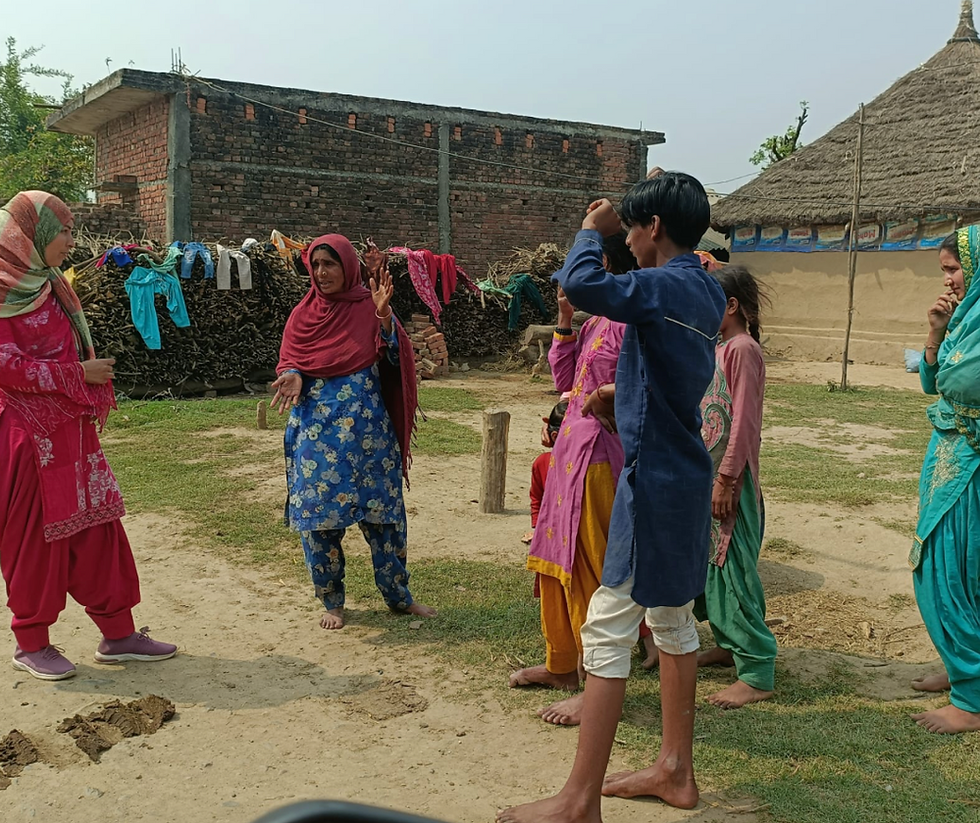
During recent visits to the Boksa community, it was encouraging to observe that children were attending school. However, there was limited awareness regarding higher education, scholarships, career pathways, fellowships, and opportunities beyond formal education.
This is where the concept of equity becomes crucial.
If a young person living in an urban area has access to the internet, libraries, coaching institutes, mentors, and career guidance, while another young person lacks all these resources, can we truly say they have equal opportunities?
Equity requires us to recognize these disparities and actively work to reduce them.
Beyond Enrollment: Understanding the Aspirations of Youth
Enrollment statistics are often used as indicators of educational success. While enrollment is undoubtedly important, registering a child in school or helping a young person complete graduation does not automatically ensure meaningful educational outcomes.
Through our interactions with youth, we have observed that many young people see education primarily as a means of obtaining a degree. Beyond graduation, they often have limited awareness of the diverse academic, professional, and skill-development opportunities available to them.
Many youth are unable to identify their interests, strengths, or long-term goals. As a result, they pursue education without a clear understanding of what they want to do in the future, which career paths are available to them, or which professions align with their aspirations. In many cases, they are completing degrees not because they have a clear vision for their future, but because higher education is perceived as the next expected step.
The issue is not a lack of talent or ambition. Rather, it is a lack of exposure, guidance, mentorship, and access to information. This is a critical but often overlooked dimension of educational inequality.
Educational equity must therefore go beyond access to classrooms and degrees. It must also include access to career awareness, life skills, mentorship, and opportunities that help young people make informed decisions about their futures.
The Role of Communities and Youth Platforms
Education is not solely the responsibility of schools. It is a shared responsibility of families, communities, institutions, and youth networks.
When parents participate in educational discussions, when communities encourage learning, and when youth platforms create spaces for dialogue and guidance, educational outcomes improve significantly.
Through PYC, we have seen how access to information can transform aspirations. Weekly calls, counseling sessions, exposure opportunities, and discussions around scholarships, fellowships, higher education, and careers have helped young people discover possibilities they were previously unaware of.
For many youth, simply learning about a scholarship, fellowship, or career pathway can open doors that once seemed out of reach.

Career Awareness: An Essential Part of Educational Equity
For many young people from rural and marginalized communities, the greatest challenge is not a lack of capability but a lack of information.
Many are unaware of:
Available scholarships
College admission processes
Career pathways
Competitive examinations
Government schemes and benefits
Fellowships and leadership opportunities
This is why career counseling, mentorship, and guidance programs are so important.
When young people receive accurate information and support, new possibilities become accessible to them. The selection of a PYC youth, Anjum, for the Inlaks Shivdasani Fellowship is one example of how access to information, guidance, and encouragement can enable young people to reach opportunities they may never have imagined possible.
What Educational Equity Really Means
Equity does not mean providing exactly the same resources to everyone.
A young person growing up in a resource-rich environment and another facing social, economic, and geographic disadvantages have different needs. Treating them identically does not necessarily create fairness.
Educational equity means providing support according to individual needs.
Some may need academic support.Some may require language assistance.Others may need financial aid, emotional support, career guidance, or exposure to opportunities.
This approach makes education genuinely inclusive.
The Way Forward
To truly achieve educational equity, several areas require focused attention:
Prioritizing girls' education and health.
Expanding quality education for marginalized communities.
Strengthening access to career guidance and mentorship.
Creating opportunities for youth to explore their interests and aspirations.
Making information about scholarships, fellowships, and opportunities widely accessible.
Encouraging community participation in educational development.
Focusing not only on enrollment but also on learning, exposure, and future readiness.
Conclusion
Education is far more than a classroom experience. It is a powerful force capable of transforming individuals, families, and communities.
However, this transformation can only occur when access to education is no longer a privilege enjoyed by a few but a genuine opportunity available to all.
When a girl can complete her education without health-related barriers, when a young person from a tribal community can confidently pursue higher education or a fellowship opportunity, when youth can make informed career choices rather than simply collecting degrees, and when every individual has the support needed to realize their potential, only then can we truly say that we are moving toward educational equity.
The door to education should be open for everyone. More importantly, every child and every young person should have the opportunity to walk through that door, discover their aspirations, and shape their own future with confidence and dignity.

By Aamna
PYC- Program Manager


Comments